"Your children are getting straight A's for jobs that won't exist when they graduate."
School teaches kids how to follow instructions and get the right answers. But a traditional classroom can’t build true independence when someone else holds the answer key.
And it’s not just the school. When parents step in to cushion every failure, kids only learn how to pass assignments and wait for validation. They miss the messy hours of breaking things, fixing them, and figuring it out on their own.
Zero friction yields zero deep satisfaction.
Raise an independent thinker who can act without permission.
The Cost of Comfort:
Look at your living room. The screens are always on, the Wi-Fi is seamless, the calendars are packed.
We have successfully cleared every single bit of friction out of our kids’ lives.
They live in a world of total immediacy. They have never had to wait for a video to buffer, flip through a physical dictionary, or sit through a slow afternoon with absolutely nothing to do. Every answer, every video, and every game lands on a single tap.
At the same time, we hover over them to smooth out the bumps. We manage their schedules, protect them from making mistakes, and step in to fix their frustrations before they even have to face them.
We think we are being helpful. What we are actually doing is hollowing out their stamina.
When they are trained day in and day out to expect an instant, effortless result, their capacity to just stay with a problem vanishes. The second they hit an analog, real-world issue that takes thirty minutes of dull, unrewarding trial-and-error, they walk away. They give up, abandon the task, and look for an immediate screen to escape into.
Traditional schools only lock this trap into place. They condition kids to believe that every single problem has a neat, tidy answer hiding at the back of a textbook or inside a strict grading rubric.
But reality doesn’t hand out rubrics. There is no answer key waiting at the back of the book.
By removing the hard parts from their childhood, we are leaving them completely unprotected. We aren’t building their success; we are conditioning them to be fragile.
While we are busy curating a smooth path, technology is accelerating at a pace the traditional school system cannot keep up with. If your child cannot tolerate the friction of a blank page or a dropped wi-fi connection today, they are being trained for a world where a machine will replace them tomorrow.
The Kim Thompson Method is a deliberate intervention. I don't introduce friction to be harsh. I do it because building that internal callus right now is the only thing that will make your child un-substitutable.
Inside the Method
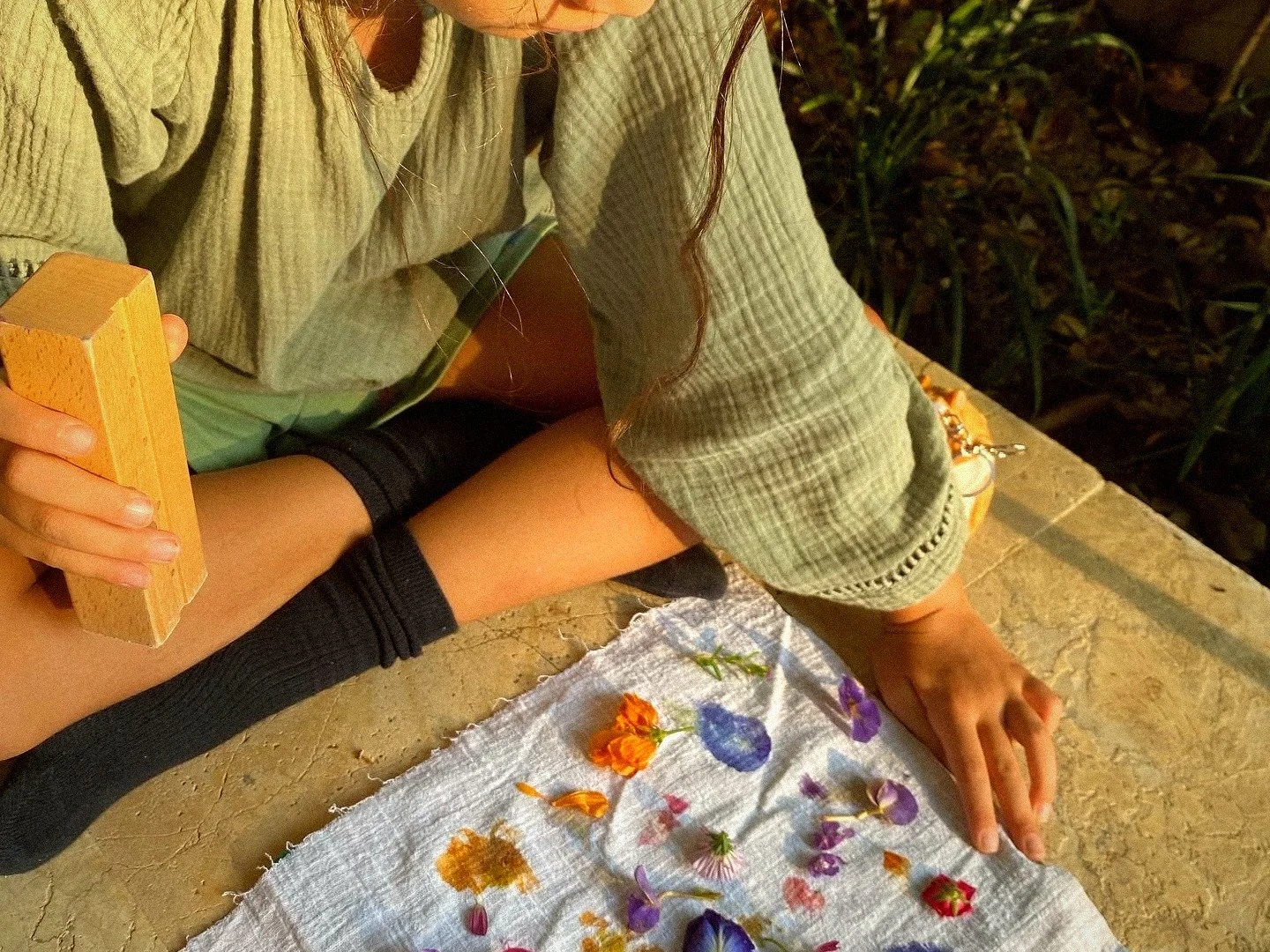
Age 10. Wanted to press flowers into fabric. First three attempts bled through and ruined the cloth.
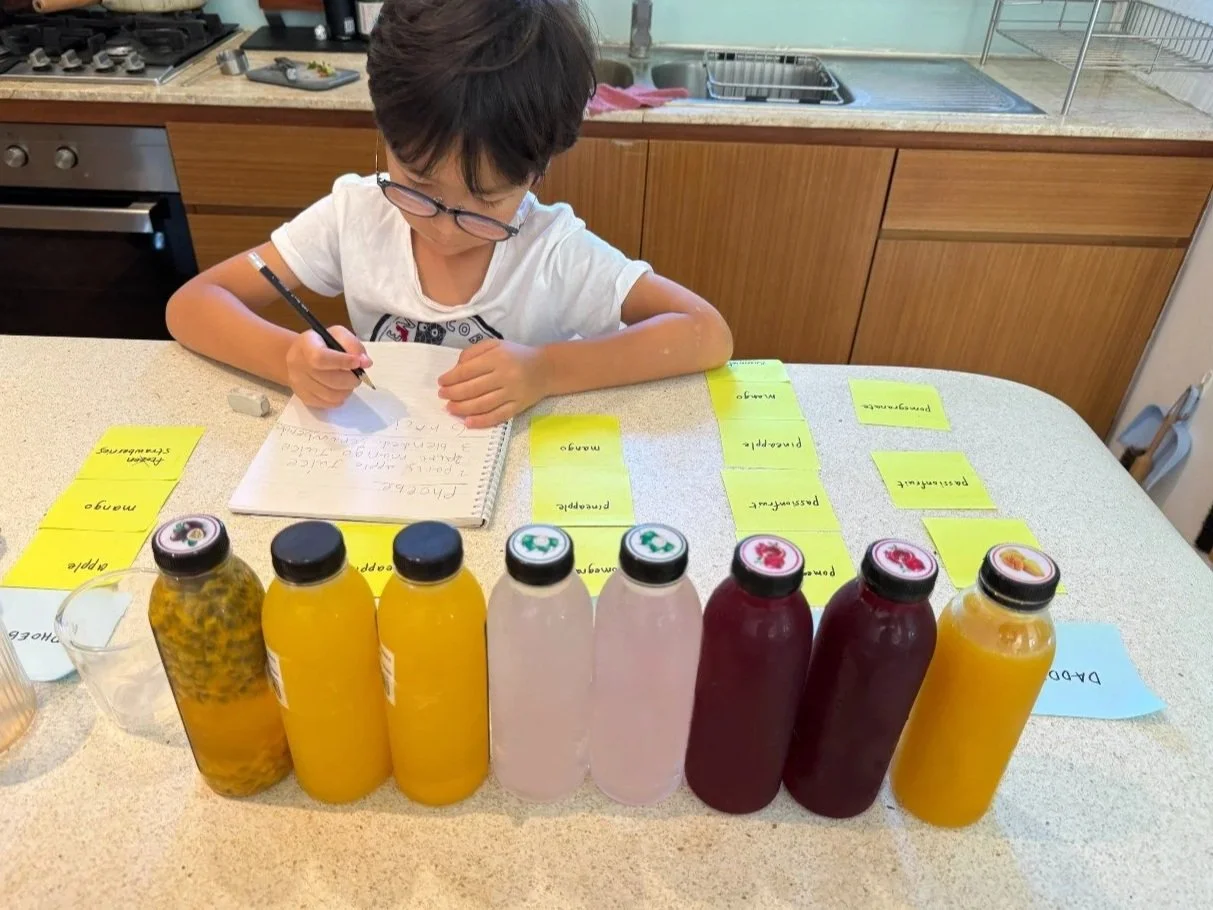
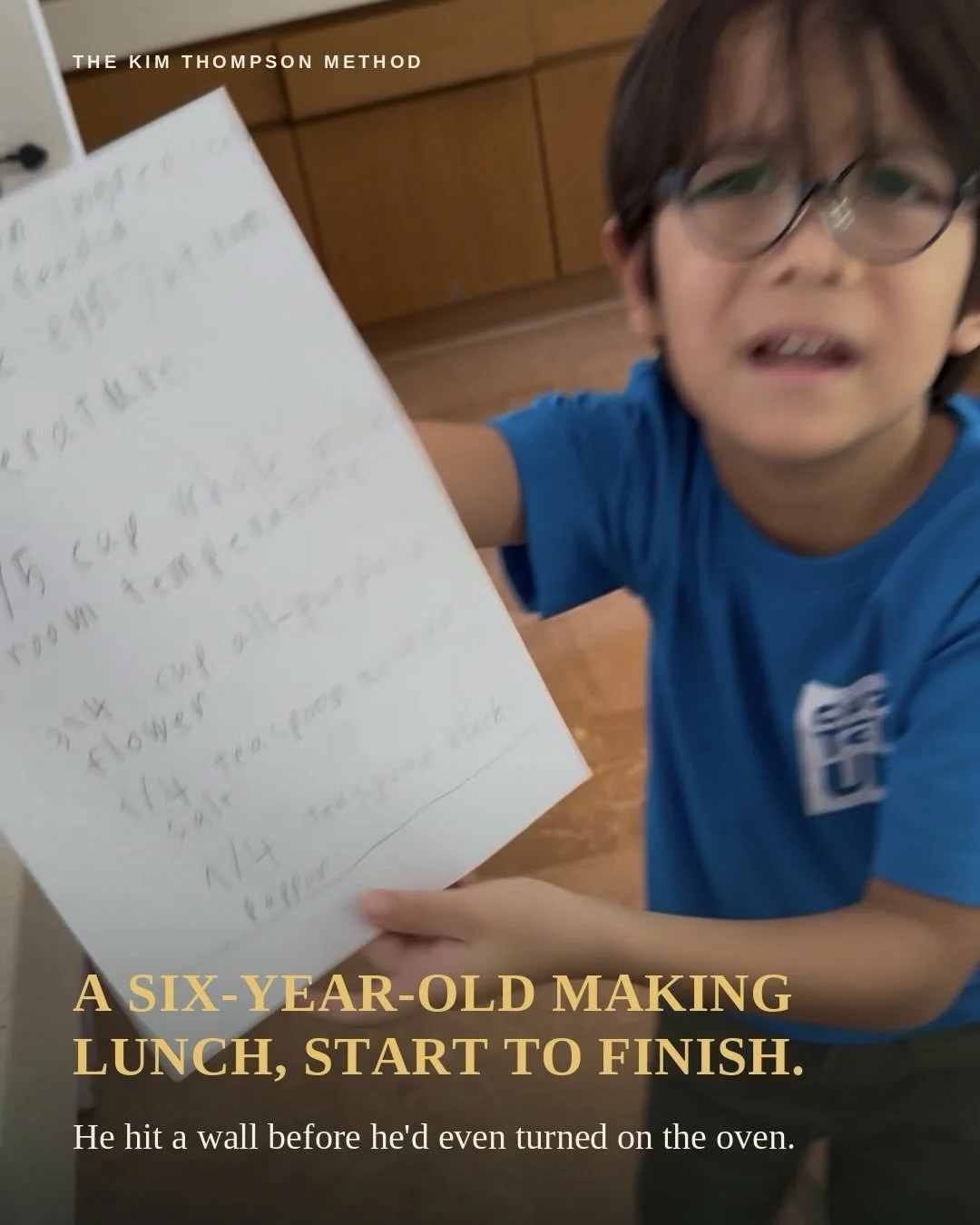
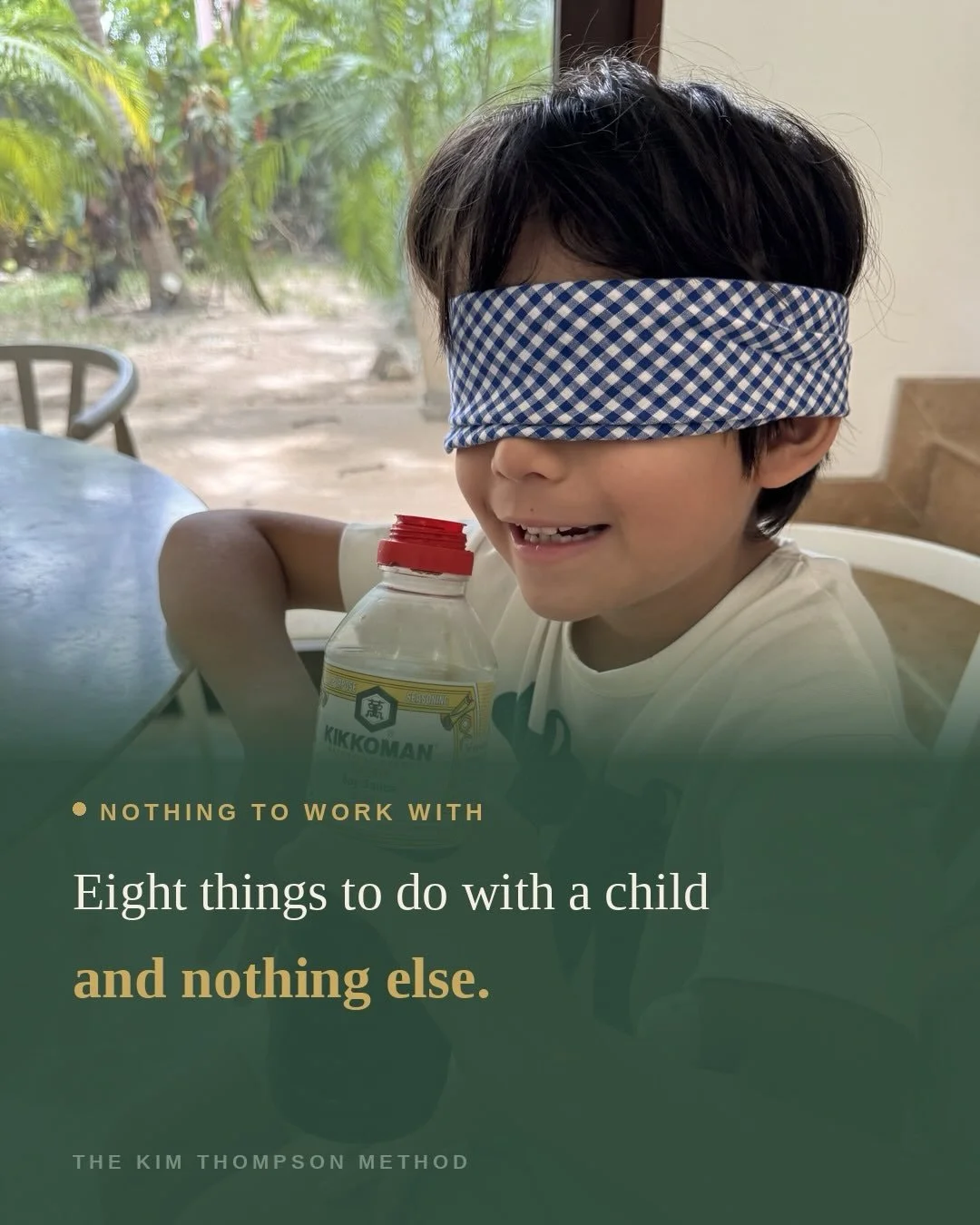
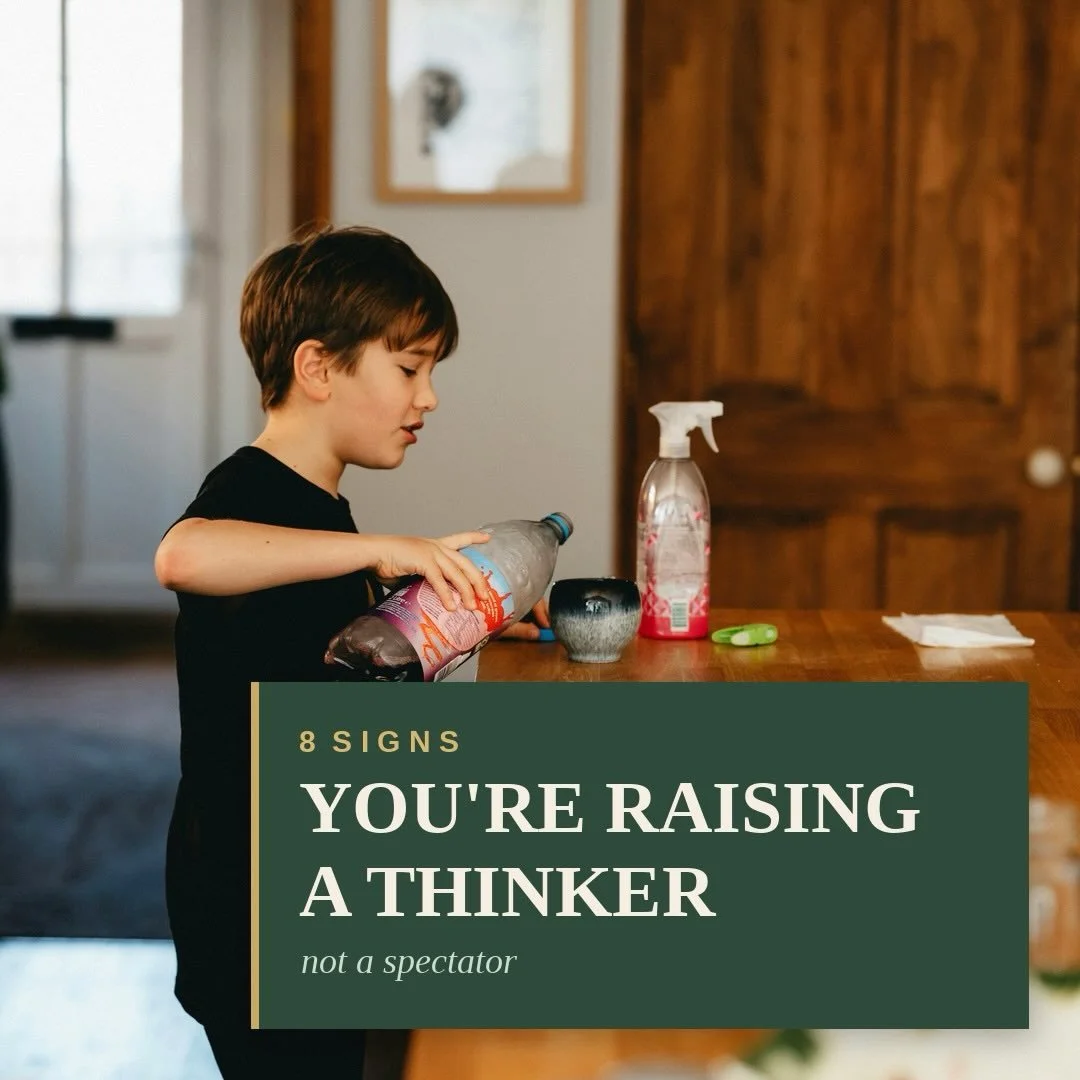
Age 6. Inspired by a juice stand, wanted to create his own blends. Taste-tested several bad ones and recorded the best for future reference.
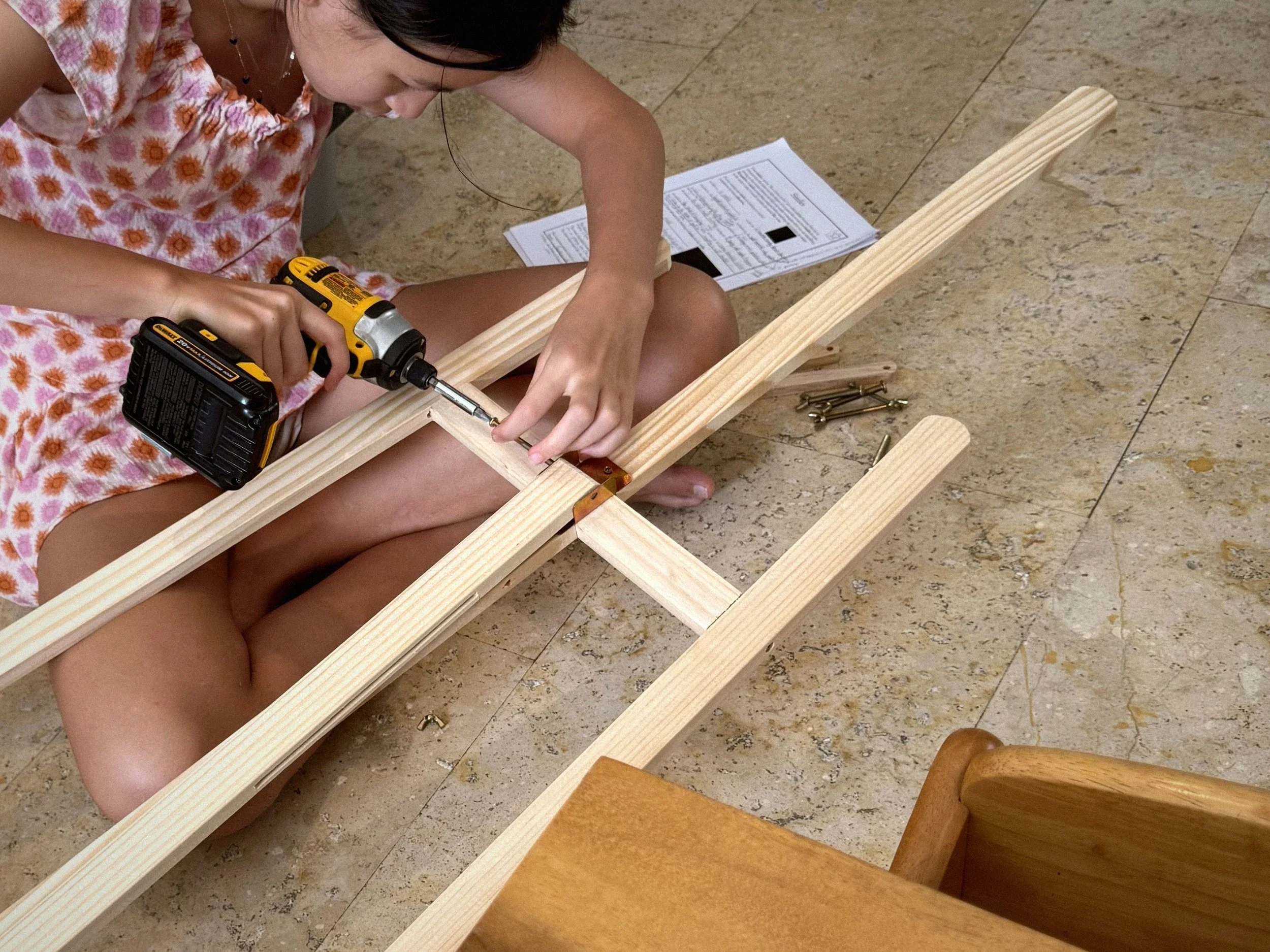
Age 13. Built a frame from scratch. The manual's measurements didn't match the real cut. A few frustrating attempts of restarting before getting it right.
How It Works
Leave the schooling alone
1
The only thing we change is shifting the daily ownership of that work entirely onto them, removing you from the constant reminders.
Hand them a challenge
2
We drop them into an unscripted, real-world mission built entirely around what they already care about. There are no instructions, no rubrics, and the hard parts are left in on purpose.
Step out of the way
3
We force them to sit with the discomfort of a stuck problem until they find a way out on their own. They learn to look at the challenge for answers, instead of looking at you for permission.
To test this exact framework in your living room tonight: